

The Sprint for Survival: Unveiling the Hidden Lives and Uncertain Future of Wild Cheetahs
The cheetah (Acinonyx jubatus) is a marvel of evolutionary engineering, universally celebrated as the fastest land animal on Earth. With its slender frame, distinctive tear marks, and explosive acceleration, it embodies the raw, kinetic energy of the African savanna. Yet, behind the breathtaking sprints and the iconic spotted coat lies a species engaged in a desperate race against time. Recent scientific research from 2024 to 2026 has provided unprecedented insights into the cheetah's complex biology, its unique hunting mechanics, and the mounting threats that jeopardize its very existence.
This in-depth exploration delves into the fascinating world of wild cheetahs, moving beyond the simple metric of speed to uncover the intricate biomechanics of their survival, the severe genetic bottlenecks they face, and the innovative conservation strategies being deployed to secure their future in an increasingly human-dominated landscape.

Beyond Speed: The Biomechanics of the Hunt
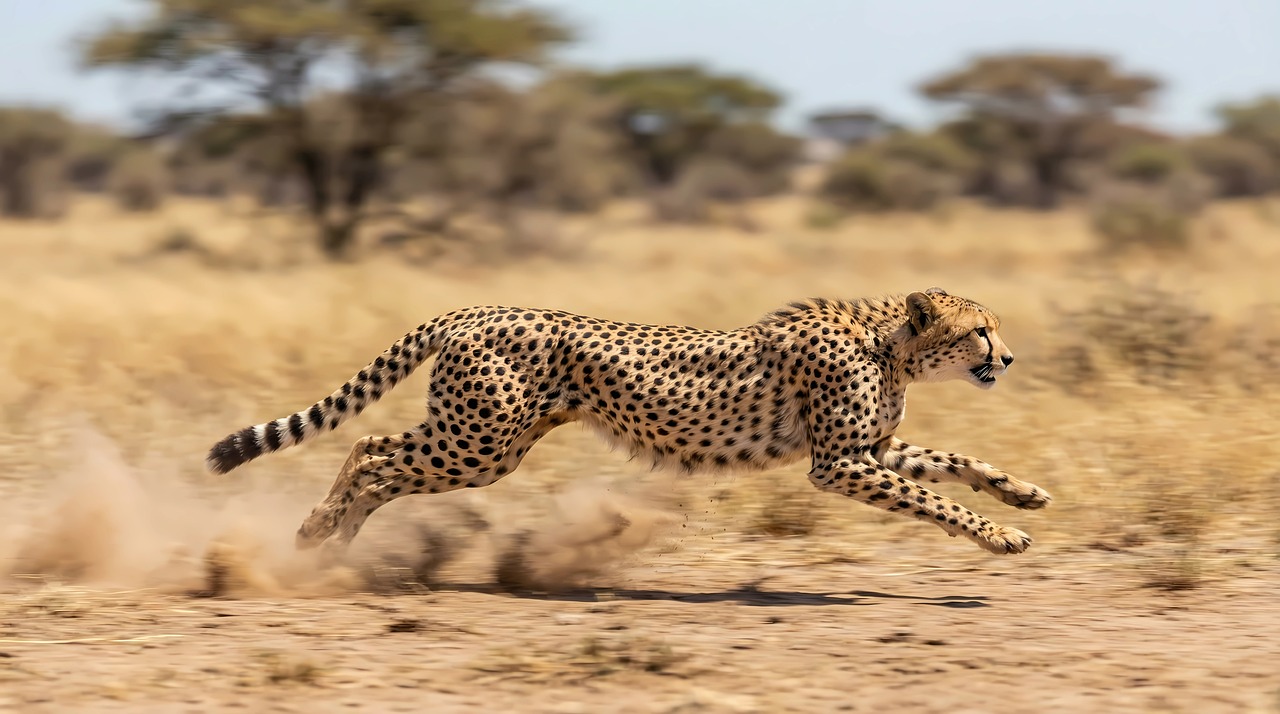
For decades, the cheetah's top speed—capable of reaching up to 29 meters per second (over 65 mph)—has been its defining characteristic. However, groundbreaking field biomechanics research published between 2023 and 2025 has shifted the paradigm. Scientists utilizing advanced high-tech collars equipped with GPS and accelerometers have revealed that while speed is crucial, it is the cheetah's unparalleled agility and maneuverability that truly dictate hunting success [1].
A cheetah's hunt is a masterclass in kinetic energy management. They can accelerate from 0 to 60 mph in a mere three seconds, a feat that outpaces most modern supercars. Yet, these explosive bursts are incredibly taxing. A typical chase lasts less than a minute. During this brief window, the cheetah must anticipate and react to the erratic, zigzagging movements of agile prey like Thomson's gazelles or impalas.
The secret to this maneuverability lies in their unique anatomy. A cheetah's long, muscular tail acts as a highly effective rudder, counterbalancing its body weight and allowing for sharp, high-speed turns without losing momentum. Furthermore, unlike other big cats, cheetahs have semi-retractable claws that function much like the spikes on a sprinter's shoe, providing exceptional traction on the loose savanna soil. Their distinctive "tear marks"—the black lines running from the inner corners of their eyes down to their mouths—serve a practical purpose, acting as anti-glare mechanisms to help them focus on prey under the harsh African sun.
"The past, present and likely future of field biomechanics of cheetah motion research highlight that maneuverability and the ability to rapidly decelerate and turn are often more critical than absolute top speed when securing a kill in the complex terrain of the wild." - Journal of Experimental Biology, 2023 [1].
However, this highly specialized hunting strategy comes with a significant trade-off. The immense energy expended during a sprint leaves the cheetah physically exhausted and vulnerable. They are often unable to defend their hard-won meals from larger, more robust predators like lions, leopards, or spotted hyenas, frequently losing their kills to kleptoparasitism.
The Genetic Bottleneck: A Species on a Knife-Edge
While their physical adaptations are extraordinary, cheetahs harbor a hidden vulnerability deep within their DNA. Scientists have discovered that the global cheetah population suffers from a severe lack of genetic diversity. This is the result of at least two major historical "bottlenecks"—catastrophic events that drastically reduced their numbers. The most significant of these occurred at the end of the last Ice Age, approximately 10,000 years ago, leaving the surviving population highly inbred.
This genetic homogeneity is a ticking time bomb. It makes cheetahs exceptionally susceptible to diseases, as they lack the genetic variation necessary to develop resistance to new pathogens. It also results in lower reproductive success rates and higher infant mortality compared to other big cats. In a rapidly changing environment, this lack of adaptability is a profound liability.
Recent genetic research has been pivotal in shaping conservation policy. In 2023, based on comprehensive genetic studies by organizations like the Cheetah Conservation Fund (CCF), the Northeast African cheetah (the subspecies found in the Horn of Africa) was officially up-listed to 'Endangered' status on the IUCN Red List [2]. This critical reclassification highlights the urgent need for targeted conservation efforts for specific, genetically distinct populations.
The Human Factor: Conflict and Coexistence
Today, the greatest immediate threat to the cheetah is not biological, but anthropogenic. The global wild cheetah population has plummeted to fewer than 7,000 adult individuals. A staggering 90% of these remaining cheetahs live outside of protected national parks and reserves, existing in shared landscapes alongside human communities and agricultural developments [2].
This proximity inevitably leads to human-wildlife conflict. As natural habitats are fragmented by encroaching human populations and invasive thornbush, cheetahs are increasingly forced into contact with livestock farmers. When natural prey is scarce, a cheetah may opportunistically hunt a goat or sheep, leading to swift and often lethal retaliation from farmers protecting their livelihoods.
Furthermore, the illegal wildlife trade poses a severe and growing threat, particularly in regions like Somaliland. Cheetah cubs are frequently poached from the wild to be sold as exotic pets in the Middle East. The mortality rate for these smuggled cubs is tragically high, and the removal of individuals from an already fragile population is devastating.

Innovative Solutions: Securing the Future
Despite the grim statistics, the narrative of the cheetah is not solely one of decline. Conservationists are deploying innovative, science-driven strategies to mitigate threats and foster coexistence.
One of the most successful initiatives is the Livestock Guarding Dog Program, pioneered by the CCF in Namibia. By breeding and placing large, protective breeds like Anatolian Shepherds and Kangals with local farmers, the program has dramatically reduced livestock losses to predators—often by 80 to 100 percent. The dogs' imposing presence and loud barks deter cheetahs without harming them, effectively breaking the cycle of retaliatory killings and shifting local attitudes toward predator conservation [2].
Another critical intervention addresses habitat loss. The "Bushblok" initiative in Namibia tackles the problem of invasive thornbush, which degrades the open savanna cheetahs need to hunt. By harvesting this encroaching bush and processing it into high-heat, low-emission fuel logs, the program restores vital cheetah habitat while providing a sustainable energy source and employment for local communities [2].
The Current State of the Cheetah Population
The status of cheetah populations varies significantly across their remaining range, reflecting a mix of severe crises and encouraging successes, as detailed in recent 2025 and 2026 reports.
| Region / Subspecies | Estimated Population (2025-2026) | Conservation Status & Trends |
|---|---|---|
| Global Wild Population | < 7,000 adults | Vulnerable (IUCN). Overall declining trend due to habitat loss and conflict. |
| Northeast African Cheetah (Horn of Africa) | Declining | Endangered (IUCN, 2023). Heavily impacted by the illegal pet trade. |
| Asiatic Cheetah (Iran) | < 30 individuals | Critically Endangered. Conservation efforts severely disrupted by regional conflict [3]. |
| India (Reintroduced Population) | > 50 individuals | Growing. A successful 2026 milestone following relocations from Africa [4]. |
| South Africa (Fenced Reserves) | Growing | Stable/Increasing. Managed breeding and "smart release" projects are proving highly successful [5]. |
Conclusion: A Race We Must Win
The cheetah is a masterpiece of nature, a creature defined by its breathtaking speed and fragile beauty. Yet, the research of the mid-2020s makes it abundantly clear that speed alone cannot outrun extinction. The survival of the cheetah depends on our ability to address the complex web of challenges it faces: from managing its precarious genetics to mitigating human-wildlife conflict and halting the illegal pet trade.
The successes seen in livestock guarding dog programs, habitat restoration, and targeted reintroductions prove that coexistence is possible and that decline is not inevitable. Securing the future of the wild cheetah requires a sustained, global commitment to conservation—ensuring that the world's fastest land animal does not sprint silently into the annals of history.
References
- Journal of Experimental Biology. (2023). Chasing the cheetah: how field biomechanics has evolved. https://journals.biologists.com/jeb/article/226/Suppl_1/jeb245122/307101/Chasing-the-cheetah-how-field-biomechanics-has
- Cheetah Conservation Fund (CCF). (2025). Change for the Cheetah’s Future: A 2025 Update. https://edzoocation.com/blogs/news/change-for-the-cheetah-s-future-a-2025-update-from-the-cheetah-conservation-fund
- Mongabay. (2026). War on Iran disrupts efforts to save the Asiatic cheetah, world’s rarest big cat. https://news.mongabay.com/2026/04/war-on-iran-disrupts-efforts-to-save-the-asiatic-cheetah-worlds-rarest-big-cat/
- Providence Journal. (2026). New Chapter in India's Wildlife Conservation: Cheetah Population Crosses 50. https://www.providencejournal.com/press-release/story/43050/new-chapter-in-indias-wildlife-conservation-cheetah-population-crosses-50-as-nine-botswana-cheetahs-arrive-at-kuno/
- Discover Wildlife. (2026). “It’s a kind of Tinder for big cats.” Cheetahs were dying out in South Africa.... https://www.discoverwildlife.com/animal-facts/mammals/conserving-cheetahs-in-south-africa
