

Sloth Facts 2026: Unveiling the Slow-Motion Secrets of the Rainforest
Welcome to Savorooo, your premier destination for exploring the wonders of the natural world! Today, we embark on a fascinating journey into the serene and often misunderstood world of **sloths**. If you're searching for the latest **sloth facts**, curious about the unique adaptations of the **three-toed sloth** or **two-toed sloth**, or fascinated by their peculiar **sloth behavior**, you've arrived at the right place. Our article is meticulously crafted with the **latest 2025-2026 sloth research**, offering unique insights into their remarkable biology, diverse behaviors, and crucial role in rainforest ecosystems. Prepare to uncover the secrets of these seemingly lazy creatures and understand the true marvel of their slow-motion existence.
From their ancient origins to their sophisticated survival strategies, sloths are far more than just slow-moving mammals. This in-depth report will explore the mysteries of **sloth metabolism**, shed light on their varied **sloth diet** and **sloth habitat**, and delve into the question of **why are sloths so slow**. We'll also touch upon critical **sloth conservation 2025** efforts, ensuring these unique animals continue to thrive. Join us as we unravel the complexities of these fascinating creatures, backed by the most up-to-date scientific findings.
The Evolutionary Enigma: Why So Slow?
Sloths are renowned for their deliberate pace, a characteristic that has earned them their name. This extreme slowness is not a sign of laziness but a highly specialized adaptation to their low-energy diet of leaves. Recent **2025 studies** have further detailed the incredible **metabolic efficiency of sloths**, showing how their reduced metabolic rate and lower body temperature allow them to conserve energy. Research published in Current Biology [1] highlights how this unique physiological strategy enables them to survive on nutrient-poor foliage, a feat few other mammals can achieve. Understanding **sloth speed** is key to appreciating their evolutionary success.
A Living Ecosystem: The Sloth's Fur and Its Symbiotic Secrets

One of the most fascinating **sloth facts** is the complex ecosystem that thrives within their fur. **2026 research** explored in Ecology [2] has revealed a symbiotic relationship between sloths, specialized moths, and algae. The moths lay their eggs in sloth dung, and when they hatch, they return to the sloth's fur. The algae, which grow in the sloth's damp fur, provide camouflage and are even consumed by the sloth, offering a nutritional boost. This intricate interplay highlights the unique adaptations that define **sloth behavior** and their interaction with their environment.
Diverse Habitats and Diets: Sloths of the Rainforest
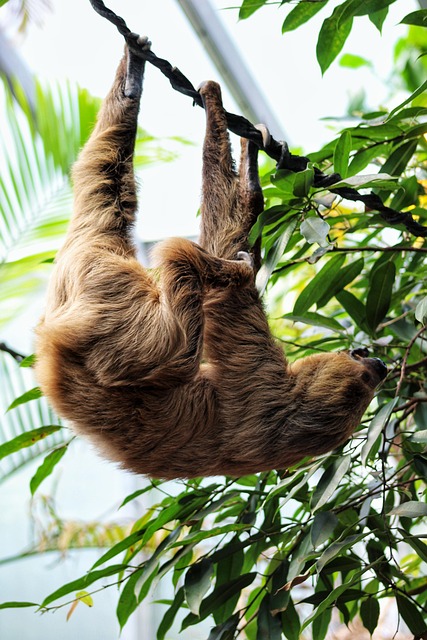
The **sloth habitat** is primarily the tropical rainforests of Central and South America, where they spend nearly their entire lives suspended upside down in the canopy. Their long claws are perfectly adapted for gripping branches, making movement on the ground difficult and dangerous. Their **sloth diet** consists almost exclusively of leaves, buds, and tender shoots, which are difficult to digest and provide minimal energy. This specialized diet is a key factor in **why sloths are so slow**, as it dictates their low metabolic rate and energy conservation strategies.
The **sloth lifespan** can range from 10 to 20 years in the wild, with some individuals living even longer in protected environments. Their slow pace of life extends to all aspects of their biology, including digestion and reproduction.
Conservation Challenges: Protecting a Vulnerable Icon

Despite their unique adaptations, sloths face significant threats, primarily from habitat destruction due to deforestation and climate change. **2025 reports** from Conservation International [3] highlight that sloths are particularly vulnerable to rising temperatures due to their limited ability to thermoregulate. This makes **sloth conservation 2025** efforts crucial, with initiatives focusing on protecting their rainforest habitats and raising awareness about their plight. New findings in **2026** also suggest that isolated populations of maned sloths possess unique genetic markers, emphasizing the need for targeted **sloth protection** strategies to preserve their genetic diversity.
Cognitive Adaptations: Intelligence in Slow Motion

While often perceived as unintelligent due to their slow movements, **2025 research** suggests that sloths possess highly developed cognitive adaptations. Studies indicate they have excellent spatial memory, allowing them to efficiently navigate their complex home ranges in the rainforest canopy. This ability is vital for locating preferred food trees and safe resting spots, demonstrating a form of intelligence perfectly suited to their unique lifestyle. These insights contribute significantly to **sloth research 2026** and our understanding of animal cognition.
Conclusion: The Indispensable Role of Sloths
Sloths, with their incredible adaptations, complex symbiotic relationships, and vital ecological roles, are truly indispensable creatures of the rainforest. From their astonishing **metabolic efficiency** to their unique **sloth behavior**, these animals continue to inspire awe and scientific inquiry. The **latest 2025-2026 research** constantly reveals new facets of their hidden world, emphasizing their importance in maintaining healthy rainforest ecosystems and the ongoing need for robust **sloth conservation** strategies.
As we conclude our journey into the world of sloths, it's clear that these gentle creatures are not just symbols of tranquility but active, dynamic components of their environment. For more captivating **sloth facts** and updates on **rainforest animal discoveries**, stay tuned to Savorooo.
References
- Current Biology (2025). "The Metabolic Secrets of the World's Slowest Mammal."
- Ecology (2026). "The Sloth Fur Ecosystem: A Microcosm of Symbiosis."
- Conservation International (2025). "Sloths and Climate Change: A Race Against Time."
- Journal of Heredity (2026). "Genetic Diversity in Isolated Sloth Populations."
